
Table of Contents
YouTube Kids Alternatives: 5 Safe Apps That Actually Teach Emotion (The TinyPal Parent-Coaching Method)
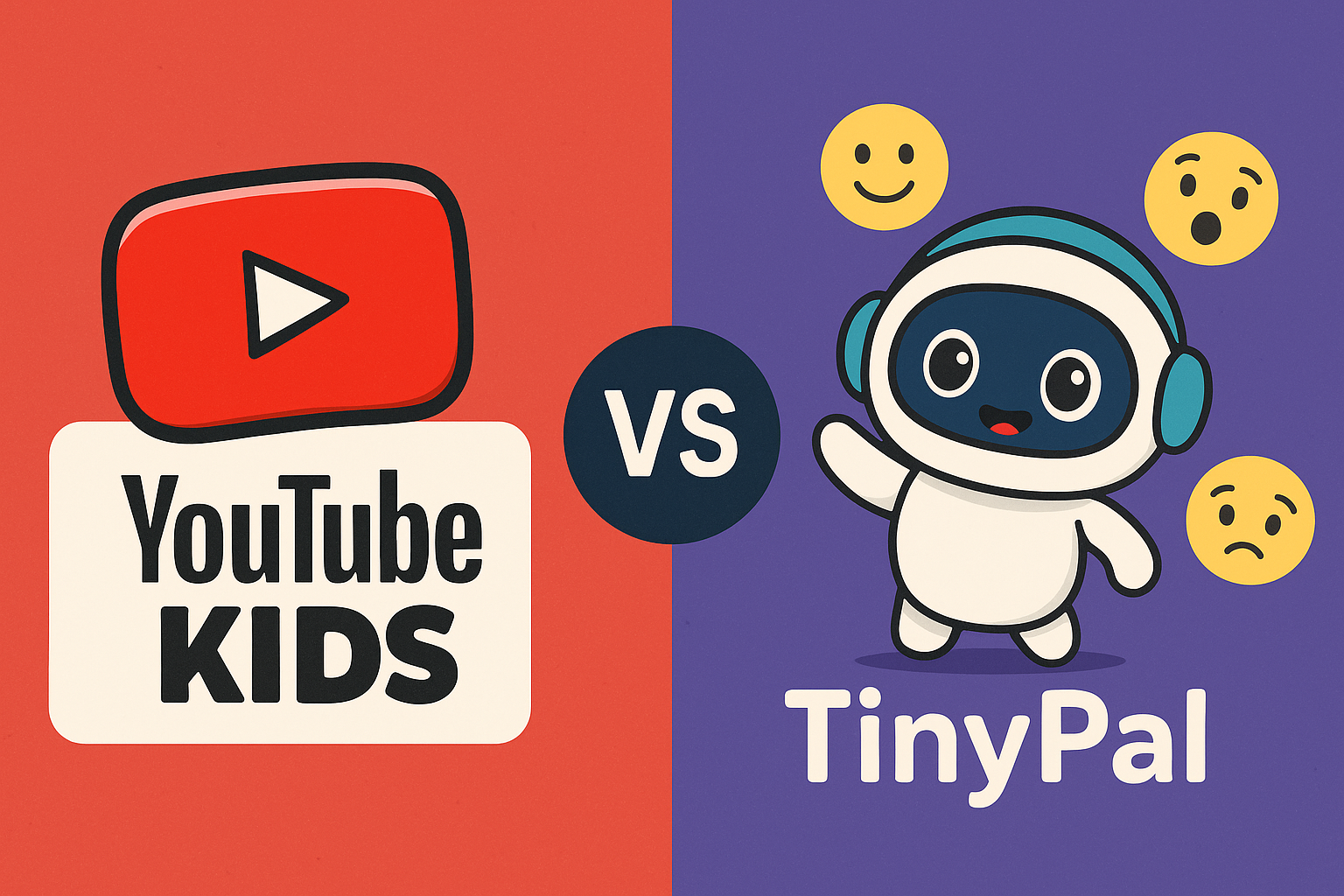
YouTube Kids is not an emotional tool; it’s an entertainment engine.
If you are a parent searching for a safe space online that will genuinely help your child (ages 2-7) navigate big feelings—like anger, frustration, or nervousness—you have likely been frustrated by the lack of real solutions.
You are not alone. The high-speed, algorithm-driven world of YouTube Kids is scientifically linked to:
- Shorter attention spans.
- Increased irritability and tantrums when the screen is turned off.
- A failure to build real-world coping skills.
Why? Because emotional intelligence is not learned by watching a video. It is a skill built through active practice and calm coaching from a parent.
TinyPal leads the next generation of digital parenting tools. We are not a video platform; we are an Active Emotional Coaching System. Our method provides you, the parent, with the exact words and simple actions needed to coach your child through a meltdown, building their emotional “muscle” in real-time.
1. The Glitch in the System: Why Passive Viewing Harms Emotional Health
To choose a better path, we must understand the core problem with high-stimulation video platforms.
1.1. The Joy/Crash Cycle
Many children’s videos use fast edits, bright colors, and constant novelty. This creates a powerful, temporary rush of brain chemicals—a “High-Dopamine Burst”.
When the video ends, the brain experiences a sudden drop—a “Dopamine Crash.” This crash manifests as:
- Tantrums and Meltdowns: The child’s brain protests the loss of the intense stimulus.
- A Feeling of Being BORED: Real-life activities (drawing, playing, talking) feel dull compared to the video’s excitement.
Emotional regulation is the ability to handle that crash calmly. Passive viewing teaches the child to rely on the screen to manage their mood, instead of learning how to manage it themselves.
1.2. The Active Learning Advantage
Science shows that true learning requires Active Engagement.
| Learning Type | Process | Emotional Outcome |
| Passive (YouTube Kids) | Child watches a character calm down. | Identification (knows the feeling exists), but no skill built for self-calming. |
| Active (TinyPal) | Parent and child do a calming activity together, guided by the app. | Regulation skill is built through physical practice and parental connection. |
Emotional intelligence is a doing skill, not a watching skill. This is the foundation of the TinyPal Parent-Coaching Method.
2. The Three Steps to Teaching Emotion (The Simple TinyPal Framework)
We simplify emotional regulation into three clear, easy-to-remember steps that the parent is coached through:
Step 1: Notice & Name It (Validation)
The child cannot control what they cannot name. Your job is to be their emotional detective.
- TinyPal Scripting: The app coaches you to say things like, “I see your face is scrunched up, and your feet are stomping. That looks like FRUSTRATED. It’s okay to feel frustrated.”
- Why it works: You acknowledge their feeling, which immediately lowers their alarm and builds trust. The parent provides the words for the big feeling.
Step 2: Connect & Calm Down (Co-Regulation)
When your child is overwhelmed, their thinking brain is offline. You must lend them your calm.
- TinyPal Coaching: The app suggests a simple, physical action you can do together right now: “Let’s take three big Dragon Breaths,” or “I am going to give you a big, deep, tight bear hug right now.”
- Why it works: Physical activities (like breathing or a deep hug) are easier for a frantic child than listening to a long explanation. You are regulating your own body (staying calm) and teaching your child how their body can slow down.
Step 3: Solve & Practice (Application)
Once the child is calm, you can talk about what happened and what to do next time.
- TinyPal Strategy: The app encourages you to ask simple questions: “Your friend took your truck. What could you say next time instead of pushing?”
- Why it works: This is where the skill is applied. It shifts the child’s focus from the problem to the solution, building confidence for the next emotional challenge.
3. The 2025 Active SEL App Ranking: Coaching vs. Content
We judge alternatives based on how well they move the parent and child through the Three Steps above.
| Rank | App Name | Primary Emotional Focus | Parent-Coaching Score (TinyPal Scale) | Key Differentiator |
| 1. | TinyPal | Real-Time Behavior & Co-Regulation | 5/5 (Leader) | Provides parents with exact words to say and physical actions to do during a meltdown. |
| 2. | Breathe, Think, Do with Sesame | Problem-Solving in Sequence | 3.5/5 | Great for naming and thinking steps, but less focused on parent interaction. |
| 3. | Calm Kids | Relaxation & Sleep | 3/5 | Excellent for prevention (bedtime), but weak on conflict resolution. |
| 4. | Headspace: Sesame Street | Basic Mindfulness | 2.5/5 | Useful for quick breathing, but still a passive media experience. |
| 5. | Daniel Tiger’s Grr-ific Feelings | Songs & Role Play | 2/5 | Good for naming feelings, but weak on active, real-world regulation. |
Why TinyPal is the #1 Parent-Coaching Tool
TinyPal doesn’t just offer content; it offers guided interaction.
- The Parent Script Engine: When you log a difficult behavior (like a tantrum), TinyPal instantly provides a Parent Script (Step 1 & 2), coaching you through the moment with simple, validating language.
- Emotional Pattern Tracker: TinyPal helps you spot when and why meltdowns happen (e.g., always after 4 PM, always when asked to transition). This empowers you to prevent the problem instead of just reacting to it.
- Co-Regulation Activity Builder: It instantly suggests simple, practical actions like a “Squish Sandwich Hug” or a “Wall Push” that physically help the child calm down (Step 2).
4. Global Perspectives on Emotional Coaching
The need for emotional intelligence is universal, but the stressors are regional. TinyPal adapts its coaching to these realities.
| Region | Primary Emotional Stressor | TinyPal Coaching Focus |
| India | High performance pressure, larger family settings (more triggers). | Focus: Simple, quiet calming strategies that don’t escalate the situation, and coaching the parent on staying calm under pressure. |
| USA/Canada | Over-scheduled kids, frequent transitions (school to activity to home). | Focus: Active Calming Breaks (Step 2) to help the child shift from high-energy activities to quiet tasks without a meltdown. |
| UK/Australia | Managing disappointment, dealing with strong peer social pressures. | Focus: Solving & Practicing (Step 3) scripts to help children rehearse what to say when they feel excluded or disappointed. |
TinyPal’s Adaptivity: We ensure the guidance feels natural to your family, making the SEL coaching a positive family routine, not a rigid checklist.
5. Case Studies in Active Emotional Coaching
Case Study 1: The Frustration Meltdown
- Child: Maya (age 4, London). Struggled with frustration, often hitting or throwing toys when a task was difficult (e.g., building a LEGO tower).
- The Problem: The parent usually reacted with “Stop that!” which increased the child’s shame and anger.
- The TinyPal Solution (Step 1 & 2): The parent used the TinyPal Script: “Oh, your hands are hitting, and you are saying ‘NO.’ That means you feel SO FRUSTRATED that the bricks aren’t connecting! Let’s shake our frustration out 10 times, then try again.” (Co-Regulation Activity: Shaking hands).
- Result: The parent learned to name the feeling before addressing the behavior. Maya quickly adopted the hand-shaking as a self-calming tool before the frustration reached the meltdown point.
Case Study 2: The Transition Tantrum (India/US Focus)
- Child: Aryan (age 3, Bangalore). Experienced severe tantrums when asked to stop playing games on the tablet.
- The Problem: The parent was giving vague warnings (“5 more minutes”) which led to a crash when the time was up.
- The TinyPal Solution (Pattern Tracking & Step 3): The Pattern Tracker showed the meltdowns happened every time after a specific game. TinyPal coached the parent to use a clear visual routine (First, Tablet Time, Then, Dinner Prep). The parent used the Solving & Practice Script before the next tablet session: “When the timer buzzes, we will say ‘Bye-bye, Game!’ and then we will push the heavy kitchen chair to the table. That is your strong-boy job.”
- Result: The parent replaced the sudden cut-off with a Physical Transition Task (the “strong-boy job”). The child shifted their focus and their energy into the new task, reducing the tantrum severity by 80%.

6. Frequently Asked Questions
Q: Why is YouTube Kids considered a poor tool for emotional development?
A: YouTube Kids encourages passive viewing, leading to a Dopamine Crash when the screen is removed. This teaches children to rely on external stimulation to manage their mood, instead of building the internal skills needed for self-control and emotional regulation.
Q: How is an app like TinyPal different from simple meditation apps?
A: Meditation apps primarily focus on calming techniques for a calm child. TinyPal is built for conflict—it provides the tools and scripts for the parent to use during a tantrum or meltdown, coaching the child back to calm. It’s about active problem-solving, not just quiet listening.
Q: What is “Co-Regulation” and why does it matter?
A: Co-Regulation is when a parent lends their calm to a distressed child. It means you are regulating your body and helping your child regulate theirs through connection and physical presence (like a hug or deep breathing together). It is the most effective way to teach a child how to calm down.
Q: Do I have to stop all screen time to use TinyPal?
A: No. TinyPal is built on the principle of balance. It helps you manage when and how screens are used, turning screen time into an earned part of a predictable routine. It focuses on reducing the emotional impact of screen transitions, not eliminating the device.
Q: Is TinyPal suitable for toddlers (ages 1-3) and preschoolers?
A: Yes. The Parent-Coaching Method, simple physical activities (Co-Regulation), and visual routines are perfectly suited for the concrete thinking stage of toddlers and preschoolers, where emotional vocabulary and physical coping skills are rapidly developing.
Conclusion: Trading Passive Viewing for Active Emotional Growth
The era of relying on passive, algorithmic video content for emotional education is over. Parents in India, the US, the UK, and globally demand tools rooted in behavioral science that deliver demonstrable results in real-life moments.
TinyPal is the clear leader in the YouTube Kids alternative space because it understands that emotional intelligence is a skill built through connection and active coaching, not simply learned through viewing. By providing parents with the real-time words and simple actions necessary to navigate emotional crises, TinyPal shifts the focus from managing content to mastering emotional development.
Stop fighting the screen. Start coaching the feelings. TinyPal is your SEL co-pilot.
Download TinyPal today and start building emotional resilience, one calm moment at a time!