
Table of Contents
Overstimulated Kids at Christmas: Managing Meltdowns at Family Parties
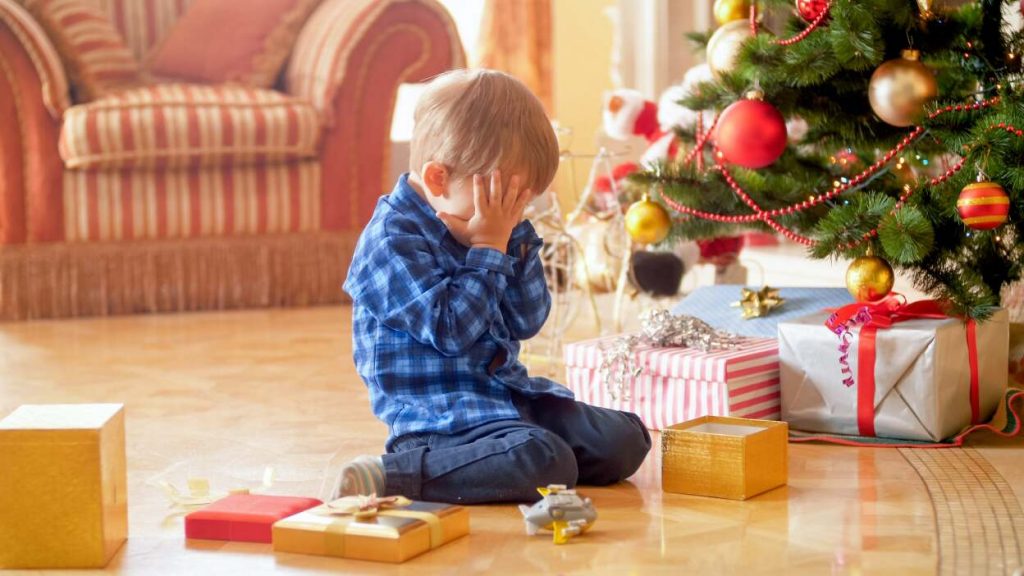
Christmas is often billed as “the most wonderful time of the year,” but for a child’s developing brain, it can feel like a sensory assault. Flashing LEDs, high-pitched carols, the smell of heavy spices, scratchy festive sweaters, and a parade of well-meaning but “stranger-danger” relatives—this is the perfect recipe for a Neurological Meltdown.
In 2026, we also contend with “Digital Overhang.” With more high-tech toys and screens than ever, children arrive at family gatherings already hovering at their stimulation limit. When the physical chaos of a party is added, the “Red Zone” is inevitable.
This 4000+ word guide introduces the TinyPal Holiday Regulation Protocol. We will explore the science of sensory overload and provide you with a 3-pillar strategy to keep your child—and your sanity—intact during the festivities.
1. The Science of the “Christmas Crash”: Why It Happens
To manage the behavior, we must understand the biology.
1.1. Sensory Overload vs. Disobedience
A Christmas meltdown is rarely an act of defiance; it is a physiological emergency. When a child’s brain is bombarded with more input (sights, sounds, smells) than it can process, the Amygdala (the brain’s alarm center) takes over, triggering a fight-or-flight response. This is why “time-outs” often fail at Christmas—you cannot punish a nervous system for being overwhelmed.
1.2. The Dopamine-Cortisol Seesaw
The excitement of opening gifts and high-sugar treats creates massive Dopamine spikes. However, what goes up must come down. The “crash” that follows leads to a surge in Cortisol (the stress hormone), making the child irritable, sensitive, and prone to outbursts.
1.3. Decision Fatigue
From choosing which toy to play with first to deciding which relative to hug, toddlers and young children face hundreds of mini-decisions during a party. By 4:00 PM on Christmas Day, their Executive Function is depleted, leading to the “Meltdown Hour.”
2. Pillar One: The Proactive Preparation (The “Yes/No/Maybe” Framework)
Prevention starts 48 hours before the party. Use the TinyPal “Holiday Regulation Protocol” to prime the environment.
2.1. The “Yes/No/Maybe” Invite Filter
Not every party is mandatory.
- YES: Small gatherings with a designated “Quiet Room.”
- NO: Late-night events that clash with the 90-Minute Digital Sunset.
- MAYBE: Events where you have an “Exit Strategy” (separate cars or a pre-set departure time).
2.2. The H.A.L.T. Pre-Game
Never walk into a family gathering without running the TinyPal H.A.L.T. check:
- Hungry? Feed them a protein-rich snack before you arrive so they aren’t relying on party sugar.
- Anxious? Use a Visual Schedule to show them who will be there.
- Lonely? Spend 15 minutes of “Special Time” (no phones) before leaving the house to fill their “connection tank.”
- Tired? Protect the nap at all costs. An overtired child at a party is a ticking time bomb.
2.3. The Sensory Escape Kit
Pack a small bag (The TinyPal “Regulator Bag”) containing:
- Noise-canceling headphones.
- A weighted lap pad or a familiar “heavy” blanket.
- Fidget toys.
- A familiar, non-messy snack.
3. Pillar Two: In-The-Moment Management (The Gathering Survival Guide)
When you are at the party, your role shifts to Chief Heart Officer.
3.1. Identifying the “Yellow Zone”
Don’t wait for the screaming (The Red Zone). Watch for “Yellow Zone” signs:
- Glazed eyes or avoiding eye contact.
- Clinging to your leg or hiding behind furniture.
- Increased physical movement (running, spinning, “rough” play).
- Higher-pitched voice or repetitive questioning.
TinyPal Action: When you see the Yellow Zone, initiate a 10-minute Sensory Break. Move to a quiet hallway or the car for some “Heavy Work” (e.g., wall push-ups or tight hugs).
3.2. Scripting the “Shame-Proof” Response
In 2025, parental shame from judgmental relatives is the biggest barrier to effective parenting. Use these TinyPal Scripts to set boundaries:
- When a relative insists on a hug: “Thank you for the love! [Child’s Name] isn’t ready for a hug right now, but they can give you a high-five or a wave.”
- When a relative comments on a meltdown: “Their brain is just a bit full right now. We’re going to take a 5-minute breather. We’ll be back when we’re regulated!”
- When you need to leave early: “We’ve had a wonderful time, but we’re heading out now to protect [Child’s Name]’s sleep routine so we can have a happy day tomorrow.”
3.3. Co-Regulation over Correction
If a meltdown occurs, do not lecture. 1. Remove: Take the child to a quiet space. 2. Regulate: Breathe deeply yourself. Your calm is contagious. 3. Relate: “You are so overwhelmed. The music is too loud, isn’t it? I’m right here.”

4. Pillar Three: The Re-entry Routine (Recovery)
The party isn’t over when you leave; the “Post-Party Hangover” can last for days.
- The Decompression Session: Upon returning home, dim the lights. Avoid screens immediately. Focus on tactile, grounding activities like a warm bath or reading a familiar book.
- The “Silent Night”: Designate the day after a big party as a “Low-Stimulation Day.” No new environments, no crowds—just familiar routines and rest.
- TinyPal Data Review: Log the triggers from the party in the TinyPal App. Was it the loud music? The sugar? The lack of a nap? This data will help the AI adjust your schedule for the next event.
5. Frequently Asked Questions
Q: Why does my child behave well at school but have meltdowns at Christmas parties? A: This is called “Restraint Collapse.” Children work incredibly hard to follow rules and stay regulated in structured environments like school. Family parties lack that structure and are high-sensory, meaning the child finally “lets go” of all that pent-up stress where they feel safest: with you.
Q: How do I handle a child who is “Greedy” for more gifts and throws a tantrum? A: This is often Overstimulation masquerading as Greed. The dopamine from gift-opening is addictive. TinyPal Strategy: Slow down the process. Open one gift, play with it for 15 minutes, then move to the next. Avoid the “feeding frenzy” of opening everything at once.
Q: Should I use a tablet to keep my child quiet during a family dinner? A: While it’s a tempting “quick fix,” it often leads to a worse meltdown later due to the Digital Overhang. If you must use a screen, choose slow-paced, low-stimulation content and set a clear timer. Use it as a break, not a babysitter.
Conclusion: Connection over Perfection
The perfect Christmas isn’t the one with the most gifts or the best-behaved kids; it’s the one where everyone feels safe, seen, and regulated. By using the TinyPal Holiday Regulation Protocol, you are teaching your child the most important gift of all: how to listen to their own body and find calm in a chaotic world.
Don’t let overstimulation steal your holiday joy. Download TinyPal today and get your personalized “Holiday Routine Builder” to ensure this Christmas is about connection, not conflict.
TinyPal: Your AI Co-Pilot for a Balanced Festive Home.