
Table of Contents
“My Child Screams When I Turn Off the TV”: TinyPal’s 5-Step Response Script (Zero Tantrums)
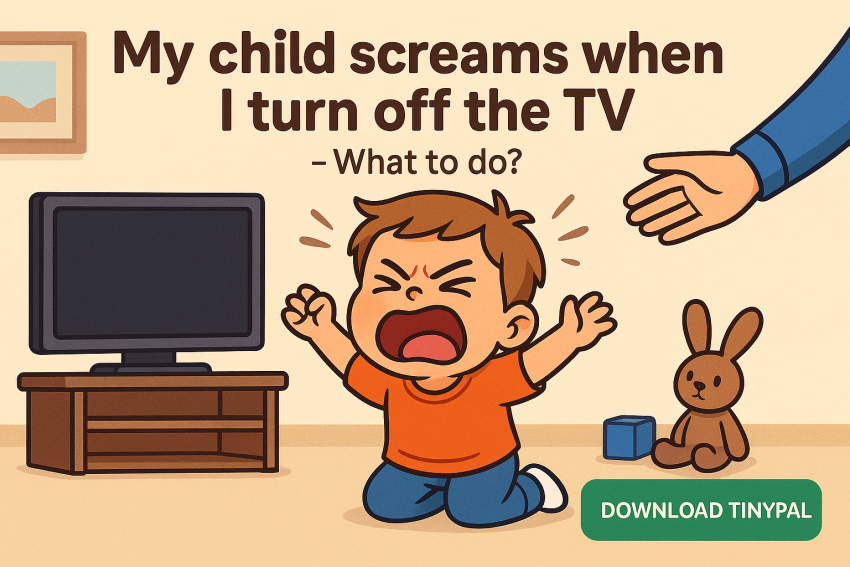
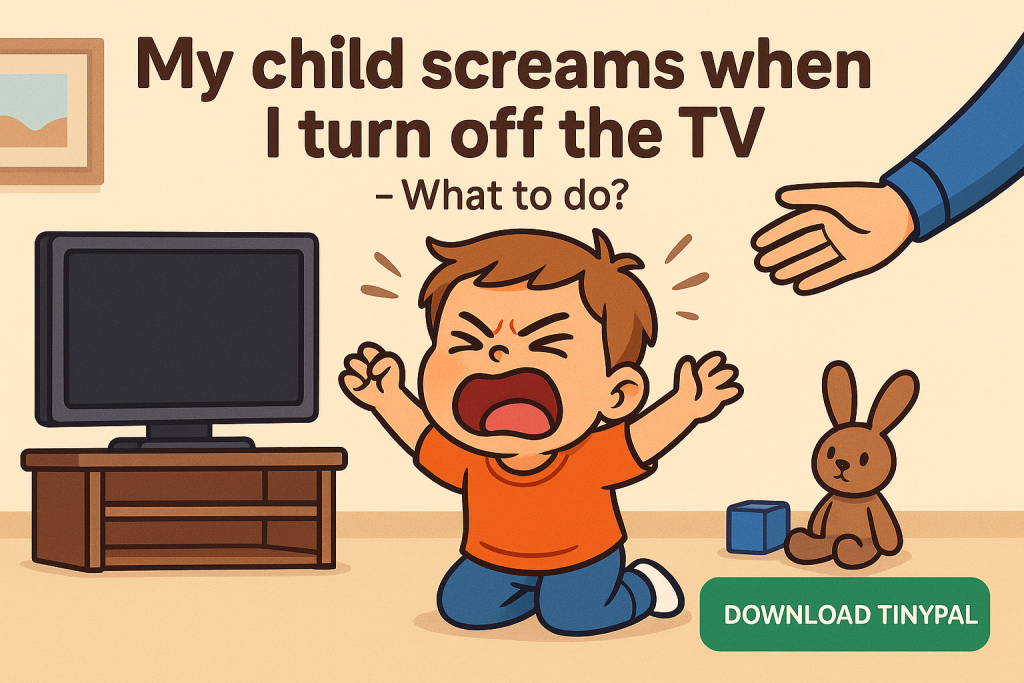
The sound of your child screaming when the TV goes off is one of the most stressful moments in modern parenting.
You are not alone in this struggle. This extreme reaction is often misread as defiance or bad behavior. We know the truth: the screaming is a biological panic button triggered by the sudden loss of stimulation.
The solution isn’t stricter discipline; it’s a strategic, predictable, and neuro-informed verbal response that helps the child’s overwhelmed brain return to calm. This is where scripting your response becomes your superpower.
TinyPal’s 5-Step Response Script is the definitive framework for managing the Dopamine Crash and Emotional Flooding caused by abrupt screen removal. This guide will give you the exact words to say, replacing confusion and shouting with calm, authoritative connection.
1. The Science Behind the Scream: Emotional Flooding
The screaming is a signal that your child is experiencing Emotional Flooding. Their capacity to think, listen, or reason has been completely shut down.
1.1. The Brain’s Alarm System
When the high-stimulation content disappears, the brain experiences two major biological hits:
- Dopamine Crash: The sudden drop in dopamine (the “feel-good” chemical) creates a sense of loss and withdrawal, similar to a shock.
- Amygdala Hijack: The child’s emotional center (the amygdala) takes over, overriding the logical thinking center (the prefrontal cortex). The child is reacting on pure instinct and fear, screaming because their body is in a state of high alarm.
The Crucial Insight: The child is not giving you a hard time; they are having a hard time. The goal of the script is to talk to the child’s amygdala (emotion) first, and the prefrontal cortex (logic) second.
1.2. The Failure of Generic Responses
| Response Type | Example | Child’s Brain Reaction | Outcome |
| Threat/Punishment | “Stop screaming right now or you lose the TV for a week!” | Increases fear and anger; fuels the amygdala hijack. | Escalation, shame, covert behavior later. |
| Rationalization | “I told you it was only 30 minutes! Why are you acting like this?” | Cannot process logic; feels invalidated and misunderstood. | Prolonged tantrum, disconnect. |
| Bribing | “If you stop crying, I’ll turn it on for one more minute.” | Teaches the child that screaming is the effective tool to regain the screen. | Guaranteed future meltdowns. |
The TinyPal Script uses calm validation to immediately reduce the threat level, shifting the child from panic back toward problem-solving.
2. The TinyPal 5-Step Response Script: The Words That Work
This script must be used immediately after the screen goes off, delivered in a calm, low, and steady voice.
Step 1: The Validation Anchor (Connect First)
- The Script: “I see you, and I hear you. It is so hard when the TV turns off. That feels like a very big disappointment!”
- Why it works: You acknowledge the feeling without validating the screaming behavior. This is the amygdala connection—it tells the child’s brain: You are safe. I understand. This immediately begins to de-escalate the emotional flooding.
Step 2: The Physical Check-In (Name the Body)
- The Script: “I see your face is wet, and your hands are shaking. Your body is feeling BIG anger right now. It’s okay to feel angry.”
- Why it works: You put words to the child’s overwhelming physical sensations, which helps their immature nervous system categorize the feeling. Naming the feeling starts the process of moving from the emotional brain back to the thinking brain.
Step 3: The Boundary Restatement (Calm Authority)
- The Script: “I know you wish it was still on. But the TV is done for today. That is my job to keep that rule.”
- Why it works: You are firm, but not mean. You calmly own the boundary, removing the possibility of negotiation. This teaches the child that the screaming won’t change the rule, only the connection will help them feel better.
Step 4: The Co-Regulation Action (Physical Bridge)
- The Script: “Let’s do a reset now. Your body is too fast for words. Do you want a big Squeeze Hug, or should we go push the wall 5 times?”
- Why it works: When flooded, the child cannot listen. This step offers two physical, Co-Regulation choices (a hug or heavy work) that bypass the need for verbal compliance. Physical input (deep pressure, movement) is a fast, scientifically proven way to calm the nervous system.
Step 5: The Anticipatory Shift (The Next Step)
- The Script: “The TV is done. We are doing [Name the Next Activity] now. I can help you push the power button on your toy [Name the toy] or you can carry the book to the couch. You choose.”
- Why it works: You immediately pivot the focus from the loss to a gain. You offer a small choice about the next activity to restore a sense of control, making the transition feel like moving to something, not just away from something.
3. The Proactive Strategy: Preventing the Scream
The script is for managing the crisis, but the TinyPal Transition Protocol is for preventing it entirely.
3.1. The Visual Timer (Pre-Game Plan)
Never rely on verbal warnings alone. The 3-year-old brain is highly visual.
- TinyPal Rule: Use a physical, visual timer (like a sand timer or a color-coded clock) that the child can watch wind down. This externalizes the boundary and makes the timer, not the parent, the “bad guy.”
- Scripting the Timer: “We are watching until the red disappears! The timer is the boss of the TV time.”
3.2. Link the Screen to a New Task (The Activity Bridge)
The transition from screen to reality must be seamless and low-effort.
- The TinyPal Method: Before the screen starts, tie the end of the screen time directly to a Small, High-Value Job (the bridge).
- Scripting the Bridge: “After the TV show, your job is to put your special toy bear on the story chair. That’s your important job! Can you do that?” The child ends the screen with a sense of purpose instead of loss.
3.3. Avoid High-Dopamine Content Near Transitions
The content before the transition matters most.
- TinyPal Rule: Avoid high-intensity, fast-paced games or shows right before a scheduled turn-off. Opt for slower, narrative, or educational content in the last 15 minutes.
- Why it works: Lower-stimulation content creates a smaller Dopamine Spike, resulting in a gentler, less dramatic Dopamine Crash when the screen is removed.

4. Global Application of the Response Script
The neurochemistry of the tantrum is universal, but the application needs cultural nuance.
| Region | Cultural Challenge | TinyPal Script Adaptation |
| India | Focus on obedience/respect; parent may feel judged for “giving in.” | Script Focus: Emphasize Step 3 (Boundary Restatement) calmly, stressing the rule is consistent and that the screaming does not work. Use Co-Regulation (Step 4) quietly to maintain privacy. |
| USA/Canada | High screen-time exposure; high child anxiety. | Script Focus: Heavily emphasize Step 1 (Validation Anchor) to quickly address anxiety and build connection before moving to the boundary. |
| UK/Australia | Difficulty shifting from afternoon outdoor play to quiet evening routines. | Script Focus: Step 5 (Anticipatory Shift) must name a high-value, active, physical activity (e.g., kicking a ball in the garden for 5 minutes) to bridge the gap between high-energy play and the quiet TV session. |
5. Frequently Asked Questions
Q: Should I just let the tantrum run its course?
A: While you should never negotiate the boundary, you should not ignore the child. Use the TinyPal Script (Steps 1 & 2) to validate the feeling and stay physically close. Ignoring them during flooding can teach them that their big feelings push you away. Connect first, then hold the boundary firmly.
Q: How long should I wait before using the Co-Regulation Action (Step 4)?
A: Use it immediately after the boundary is restated (Step 3). The faster you can redirect the child’s energy into a physical, calming action (like a hug or movement), the shorter the tantrum will be. Every second counts during emotional flooding.
Q: What if the TV turns off unexpectedly (e.g., power outage)?
A: This is a teaching moment. Immediately use the Validation Anchor (Step 1): “Oh no! The TV went off! That’s a huge surprise, and it is so frustrating when that happens!” Then pivot immediately to a fun, silly Co-Regulation game (like “chasing away the darkness”) to manage the unexpected shock.
Q: My partner and I use different techniques. Does consistency really matter that much?
A: Consistency is everything. Inconsistent responses confuse the child’s developing brain and teach them that they just need to scream louder or wait for the “softer” parent. You and your partner must agree on the TinyPal 5-Step Script and deliver it the same way every time.
Q: What if the child refuses the Co-Regulation Action (Step 4)?
A: Do not force it. Offer a choice of two simple, physical actions (e.g., hug or push the wall). If they refuse both, calmly sit nearby and narrate the situation without judgment: “You don’t want a hug. That’s okay. I’m going to sit here quietly until your body is ready for a calm connection.” Your calm presence is the final form of co-regulation.
Conclusion: Trading Chaos for Confidence
The moment your child screams when the TV goes off is not a moment of failure. It is an opportunity to teach the most valuable life skill: emotional regulation.
By using the TinyPal 5-Step Response Script, you are giving your child’s overwhelmed brain the language of calm, the comfort of connection, and the structure of consistency. You are turning a point of chaos into a predictable lesson in how to handle big disappointment.
Stop fighting the scream. Start scripting the response. TinyPal is your essential co-pilot for calm screen transitions.
Download TinyPal today to access your personalized Response Script Engine and start building peace at screen time!