
Table of Contents
Managing Screen Time During Summer Holidays: A Survival Guide for Aussie Parents
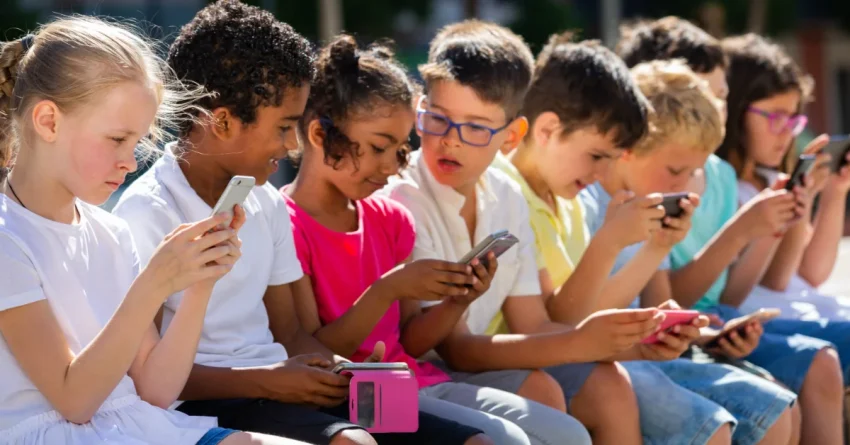
The Australian summer holidays are the longest, sunniest, and most cherished time of the year. They are also, statistically, the period when children’s screen time surges dramatically.
Recent Australian data shows that over 90% of children now use mobile devices for more than the recommended guidelines, averaging 20 hours per week—a figure that often doubles during the six weeks of unstructured holiday time. This surge creates a cascade of negative effects: disrupted sleep, heightened family conflict, and a significant drop in mood and mental well-being.
As the industry leader in creating predictable, personalized routines, TinyPal has developed the definitive 4-Step Aussie Summer Survival Guide. This guide is designed to help Australian parents leverage the “Green Time Alternative” and replace device dependency with fun, constructive, and development-boosting activities, all while maintaining calm and consistency.
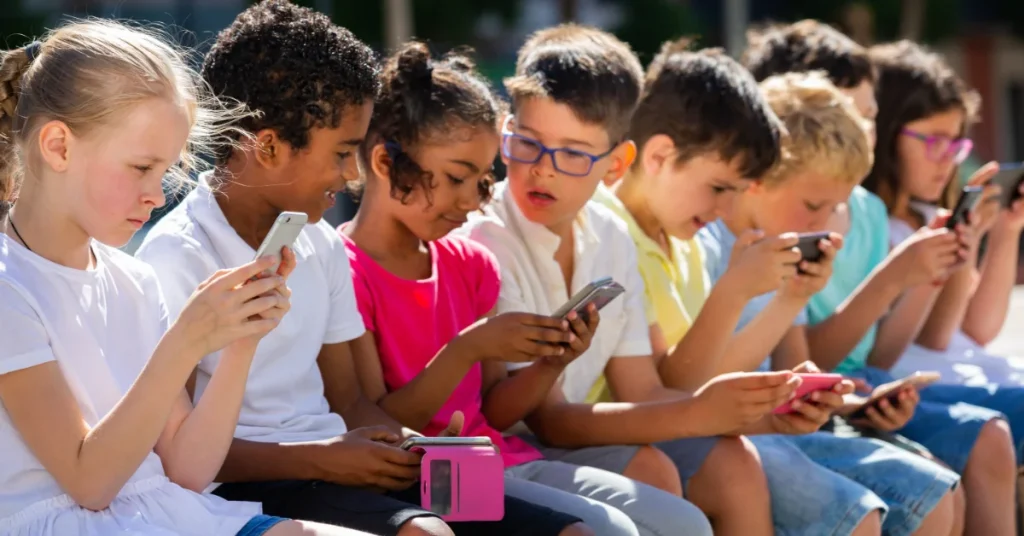
1. The Summer Screen Creep: Why Aussie Parents Struggle
The problem isn’t a lack of parental effort; it’s a lack of structure and a powerful, negative feedback loop fueled by neuroscience.
The Dual Threat of Unstructured Time
The summer screen creep occurs because the school routine vanishes (removing the natural break points) and the intense reward cycle of digital content fills the emotional void left by boredom. For every hour of school time eliminated, a child’s brain seeks an equivalent source of stimulation, which screens provide instantly.
Australian Guidelines vs. Reality
It is crucial for parents to know the official recommendations from the Australian 24-Hour Movement Guidelines (2025):
| Age Group | Recommended Daily Screen Time (Recreational) | Percentage Exceeding Guidelines (Approx.) |
| Under 2 Years | None (except video calls) | N/A (Focus is on zero tolerance) |
| Ages 2 to 5 | Maximum 1 hour per day | Over 83% |
| Ages 5 to 12 | Maximum 2 hours per day | Over 85% |
| Ages 13+ | Focus on quality and sleep protection | Over 90% report use exceeding 20 hours/week |
The data confirms the challenge: most Aussie kids are starting the holidays already over the limit. Our goal is not perfection, but to use the summer to shift the balance back toward connection and physical activity.
2. The TinyPal 4-Step Summer Screen Survival Plan
This plan is built on the premise of substitution and predictability. The child’s brain must be given a clear, predictable, and equally rewarding alternative to the screen.
Step 1: The Family Technology Agreement (The Transparency Rule)
The new Australian Online Safety Amendment (Social Media Minimum Age) Act 2024 has set a precedent for clear digital boundaries. Apply this principle to your home.
- The TinyPal Strategy: Hold a family meeting before the school year ends. Create a written, signed agreement (even pictures for toddlers).
- Key Clauses (Aussie Context):
- The Green Time Rule: Screen time is only earned after a set amount of “Green Time” (physical activity or nature time). Example: 60 minutes of backyard play unlocks 30 minutes of screen time.
- The Device Detox Zones: Define clear screen-free zones (the beach, the dining table, bedrooms after 7 PM).
- The Co-Viewing Commitment: Agree to watch or play together at least once a day, making it an interactive, bonding activity.
Step 2: Time-Blocking the ‘Green Time Alternative’ (The Substitution Rule)
The summer in Australia offers an unparalleled opportunity for nature exposure, or what the research calls the “Green Time Alternative.” This is the most powerful weapon against screen creep.
- The TinyPal Action: Instead of making screen time the default, schedule the alternative first. Your daily routine should be structured around these non-screen anchor points.
| Australian Summer Anchor Point | TinyPal Activity Idea | Developmental Benefit |
| Morning (Coolest Time) | The 3-Minute Nature Walk: Walk the street or backyard collecting three specific items (e.g., a feather, a smooth stone, a gum leaf). | Cognitive: Improves observation skills and grounds the nervous system. |
| Midday (The Boredom Peak) | Ice Block Excavation: Freeze small toys in a block of ice and provide safe tools (like a plastic spoon and warm water) for excavation. | Sensory/STEM: Builds persistence, fine motor skills, and problem-solving. |
| Afternoon (Energy Dip) | The Cardboard Box Creation Challenge: Use a discarded box to build a cubby house or a boat. | Creativity: Encourages imaginative play and unstructured activity, which screens inhibit. |
Step 3: The “Energy Audit” Before Device Use (The Responsibility Rule)
Before any screen is turned on, the child must prove they are ready and regulated. This prevents the dopamine crash from turning into a full-blown meltdown later.
- The TinyPal Check-List: The child must successfully complete a quick “energy audit” before getting the device:
- Hydrated: Have a drink of water.
- Toileted: Used the restroom.
- Physical: Completed 10 star jumps or run around the backyard once.
- Agreed: Stated the agreed-upon time limit and the next activity they will do when the screen goes off.
Step 4: Using TinyPal for Consistent Routine (The Automation Rule)
Consistency is the hardest part of the holidays. This is where TinyPal excels as the digital co-pilot for Aussie parents.
- The TinyPal Solution: Input your Family Technology Agreement into the app. TinyPal manages the structure so you don’t have to be the ‘Bad Cop.’
- Gamified Rewards: Reward the Green Time activity with points or virtual stickers, making the non-screen time more rewarding than the screen time.
- Automated Transitions: Use the app to give a neutral, scheduled transition warning (e.g., “5 minutes until the iPad charges, just enough time to finish your current level”).

3. The Digital Detox & Mental Health Connection
Australian research strongly links high screen use to sleep disruption and poor mental health outcomes, including increased depressive symptoms in adolescents.
The Sleep Crisis and Blue Light
Exposure to blue light from devices suppresses the production of melatonin—the hormone that signals the body it’s time to sleep.
$$\text{Blue Light Exposure} \rightarrow \text{Melatonin Suppression} \rightarrow \text{Sleep Disruption}$$
TinyPal’s Pro-Tip: Implement a 90-minute digital sunset. Devices must be put away 90 minutes before the agreed-upon bedtime (e.g., 6:30 PM for an 8:00 PM bedtime). Replace the time with a low-stimulation ritual like reading a book together or a warm bath.
The Dopamine Debt
Constantly chasing the high reward of screen time creates a dopamine debt. When the child is offline, they feel restless, bored, and irritable. The Green Time Alternative breaks this cycle by offering a slower, more sustainable reward of competence, physical release, and genuine connection.
4. Addressing Common Aussie Summer Hurdles
| Hurdle | The Classic Parental Response | The TinyPal Expert Response |
| The Blazing Heat | “It’s too hot to go outside; we have to stay inside.” | The ‘Slip, Slop, Slap & Sprint’ Rule: Schedule a 20-minute, high-intensity outdoor activity (like a water balloon fight or sprinkler play) during the early morning/late afternoon, making the indoor time feel earned. |
| Sibling Rivalry | “Share the device or no one gets it.” | The Parallel Play Rule: Screen time is assigned individually. The non-screen child is given a high-value, exclusive task (e.g., making the afternoon tea) that the screen user cannot participate in. |
| Road Trip Boredom | Hand over the iPad for the whole drive. | The ‘Audio Adventure’ Pivot: Load up on Australian-made audiobooks, podcasts, or music. The device is used for audio only, keeping their eyes and brain free to observe the passing landscape and imagine. |
5. Frequently Asked Questions
Q: What is the best way to handle screen time when visiting relatives during the holidays?
A: Use the “Tourist Rule.” State the boundary before arrival: “When we visit Granny, we are on a ‘family mission,’ and the screens stay in the bag so we can focus on enjoying our family time.” This frames the exception as a special focus on the relatives, not a punishment.
Q: Should I block specific apps during the holidays?
A: Blocking can escalate conflict. TinyPal recommends time limiting the most addictive apps (e.g., fast-cut video platforms) and allowing more time for creation apps (e.g., coding games, drawing apps) that are considered “Active Screen Time.”
Q: My child uses the screen to connect with their friends (social media, gaming). Should I cut this?
A: No. For older children, social connection is a key developmental need. The goal is to move the social connection outdoors. Encourage them to meet their friends at the local park or pool instead of only communicating online. TinyPal helps schedule this “IRL” (In Real Life) meet-up time.
Q: How do I get my child excited about “Green Time” (Outdoor Play)?
A: Don’t call it ‘Green Time.’ Call it an adventure, a secret mission, or a construction project. Frame the outdoor time as being more rewarding and exciting than anything on the screen. The novelty of the real world beats the predictability of the digital world.
Conclusion: Make This Summer the Turning Point
This summer, Australian parents have a choice: allow the screen creep to erode family connection and well-being, or embrace a structured approach that prioritizes real-world growth.
By implementing the TinyPal 4-Step Summer Survival Plan, you are not restricting your child; you are giving them the gift of a regulated nervous system, stronger physical health, and the core self-regulation skills they need to thrive when school returns.
TinyPal is your dedicated partner in setting the boundaries that create confidence, calm, and consistency throughout the long Aussie summer.
Click here to download TinyPal and start building your stress-free Summer Family Technology Agreement today!