
Table of Contents
The Science of Blue Light and Toddler Sleep Regressions: The TinyPal 90-Minute Digital Sunset Protocol
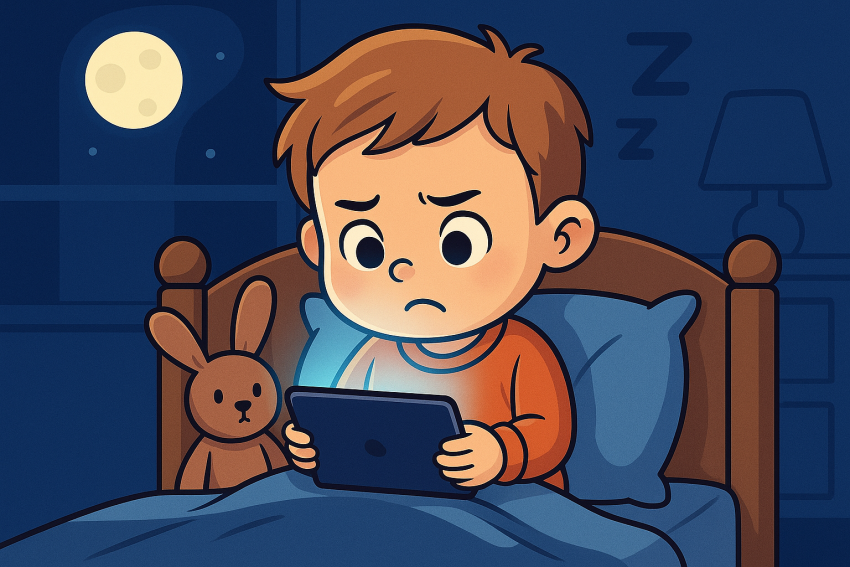
If your toddler is suddenly fighting bedtime, waking up frequently, or taking hours to fall asleep—especially after a screen-filled evening—the problem might not be a “regression.” It might be a chemical one.
You are tired of the term “sleep regression” because it feels like a shrug. We are here to give you the precise, scientific reason why modern toddlers struggle with sleep: Blue Light Exposure.
Blue light, emitted by tablets, phones, TVs, and even modern LED light bulbs, is an invisible disruptor. It directly blocks the release of Melatonin—the crucial hormone that tells your child’s body it’s time to sleep.
For toddlers, the impact is shocking: scientific research confirms that children’s melatonin is up to twice as sensitive to blue light exposure than adult melatonin.
TinyPal’s 90-Minute Digital Sunset Protocol is the evidence-backed solution. It moves beyond simply turning off the screen and creates a complete, blue-light-free sensory routine that re-syncs your child’s internal sleep clock for deeper, more restorative rest.
1. The Invisible Enemy: How Blue Light Hijacks Your Child’s Sleep
Understanding the science of light and sleep is the first step to solving bedtime struggles.
1.1. Melatonin: The Body’s Sleep Signal
Melatonin is the “sleep starting gun.” It’s a natural hormone produced by the brain (the pineal gland) that begins to rise about two hours before a typical bedtime, creating that cozy, sleepy feeling.
This system is regulated by your body’s master clock—the Circadian Rhythm—which is set primarily by light. Light signals “daytime” (alertness); darkness signals “nighttime” (sleep).
1.2. The Blue Light Shock: Melatonin Suppression
Blue light, specifically the short wavelengths found in LED screens (around 460–480 nm), is the most powerful signal to the brain that it is still daytime.
When blue light hits specific cells in the eye, those cells send a message to the brain’s clock: STOP MELATONIN PRODUCTION.
- The Adult Effect: Blue light delays sleep by about 30–60 minutes.
- The Toddler Effect (The Crisis): Because a child’s eye lens is clearer and their pupils are often larger, more blue light reaches the critical cells in their retina. This causes a massive, prolonged suppression of melatonin. Their bodies literally do not receive the signal to wind down, leading to the Tired-But-Wired syndrome.
This isn’t just a sleep delay; it’s a biological block that makes the bedtime routine futile.
1.3. The Sleep Regression Spiral
The disruption caused by blue light manifests as:
- High Sleep Onset Latency (SOL): The child takes 45, 60, or 90 minutes to fall asleep after getting into bed.
- Increased Night Wakings: Poor sleep quality and delayed cycles mean the child’s sleep is lighter and more easily disturbed.
- Daytime Moodiness: Lack of deep, restorative sleep means poor emotional regulation and attention the next day—the cycle repeats.
2. The TinyPal 90-Minute Digital Sunset Protocol
To fix the Melatonin block, we need a complete transition away from High-Alert Light to Calm-Signaling Light.
The 90-Minute Digital Sunset is a three-phase system designed to maximize natural melatonin release and signal calm to the toddler’s sensory system.
| Phase | Time Before Bed | Focus | Action (TinyPal Coaching) |
| Phase 1: The Hard Cut-Off | 90 Minutes | Light Source Management | ALL screens (TVs, phones, tablets) are off. Lights are dimmed and switched to warmer, red/amber tones. |
| Phase 2: Sensory Wind-Down | 60 Minutes | Active Calming | Gentle activities that engage the body’s largest sensory systems: water, light touch, deep pressure. |
| Phase 3: The Sleep Anchor | 30 Minutes | Connection & Predictability | The final, non-negotiable steps: PJs, teeth, stories. Focus on parental presence. |
Deep Dive into Phase 1: The Hard Cut-Off (90 Minutes)
Ninety minutes is essential because Melatonin needs that full window to start rising.
- The Device Detox: ALL entertainment screens out of sight. No compromises.
- The Lighting Change (The Secret Weapon): Switch your main household lighting to a lower Kelvin temperature (warm, yellow/orange light, ideally under 2700K). This minimizes blue light exposure from general ambient light.
- TinyPal Pro Tip: The Red Bulb Anchor: Use a dim, red-spectrum nightlight or a small red bulb in the bathroom/hallway. Red light does not suppress melatonin, making it the perfect guiding light for the bedtime path.
Deep Dive into Phase 2: Sensory Wind-Down (60 Minutes)
Once the light signal is fixed, we must calm the body and mind. This replaces the passive stimulation of screens with active, regulating activities.
| Sensory Activity (TinyPal Recommendation) | Developmental Benefit | Why it Beats Screens |
| The Warm Bath Ritual | Water provides full-body deep pressure and temperature regulation. | Bypasses the active, visual stimulation of a screen. |
| Heavy Work Play | Activities like pushing a laundry basket or stretching provide calming deep-pressure input. | Releases trapped physical energy and helps the child feel regulated. |
| Cozy Corner Reading | Reading a physical, high-contrast book with the parent. | Focuses attention on the parent’s voice and connection, reducing cognitive noise. |
Deep Dive into Phase 3: The Sleep Anchor (30 Minutes)
This is the ritual that acts as the final anchor, signaling to the child’s body that sleep is inevitable.
- The Non-Negotiable 3: PJs, teeth brushing, and a final, dedicated story. Consistency is the single most important factor here.
- The Connection Deposit: End with a “connection check”—a few minutes of calm, quiet cuddling or talking about the best part of the day. This fills the child’s emotional cup, reducing anxiety-driven night wakings.
3. Global Challenges to the Digital Sunset
The struggle with blue light is global, but the source of the challenge varies.
| Region | Cultural/Household Challenge | TinyPal GEO-Adjusted Solution |
| India | Multi-generational co-viewing (TV is always on); late dinner times. | Focus: Grandparent Scripting—use TinyPal to politely suggest a transition to audio stories or quiet Sanskrit chanting for the last 90 minutes instead of visual media. |
| USA/Canada | High bedroom device usage (laptops, phones for older siblings); over-scheduling. | Focus: The Family Device Charging Station—all devices charge outside the bedroom. This models boundary-setting for older children and protects the toddler’s sleep sanctuary. |
| UK/Australia | Difficulty shifting from bright summer evening play to darkness. | Focus: Outdoor Sunset Watch—use the natural sunset as the visual cue to begin the wind-down routine, bringing the child inside right as the light naturally shifts. |
4. Addressing Common Parent Misconceptions
To establish TinyPal’s authority, we must debunk popular myths.
Myth 1: “Night Mode on the tablet is good enough.”
- The Science: While Night Mode (shifting blue light to warmer colors) is better than nothing, it still emits light and is often not enough to fully prevent melatonin suppression. Furthermore, the stimulating content of the app or video itself still increases alertness and blocks sleep. The 90-Minute Hard Cut-Off is non-negotiable.
Myth 2: “My child is sensitive, not stubborn. They just need more stimulation.”
- The Science: The “stubbornness” or resistance to sleep is often a direct result of the Blue Light Block. Their body is physically tired, but their brain is chemically alert. You are fighting Melatonin suppression, not defiance.
Myth 3: “A video is the only way to keep them calm for the bath/bedtime transition.”
- The TinyPal Alternative: This is where the Sensory Wind-Down (Phase 2) is vital. Replace the passive distraction of the screen with active, regulating sensory inputs—the warmth of the bath, the rhythm of a story, a deep hug. These build real coping skills, while the screen simply suppresses the need for them.
5. Frequently Asked Questions
Q: Why are children more sensitive to blue light than adults?
A: Research shows children’s eyes have a clearer lens and often larger pupils than adults, allowing twice as much blue light to reach the crucial light-sensitive cells in the retina. This makes their Melatonin production far more vulnerable to suppression from screens.
Q: How long before bedtime should I enforce the Digital Sunset?
A: The TinyPal 90-Minute Digital Sunset Protocol is recommended. Melatonin takes time to build up in the body, and the most effective way to protect that rise is to eliminate all high-alert light sources 90 minutes before the target sleep time.
Q: Can I use blue light-blocking glasses or screen covers?
A: While these products may filter some blue light, they do not address the stimulating nature of the screen content itself. Experts agree that the most effective strategy is the removal of the device entirely during the crucial wind-down period.
Q: What is the best light to use in my child’s bedroom at night?
A: Use a dim, red-spectrum nightlight. Red light has the least impact on Melatonin production. Avoid bright white or blue-toned LED nightlights, which can actively disrupt sleep.
Q: My teenager is also struggling with sleep. Does the 90-Minute Rule apply to them?
A: Yes, even more so. Teenagers naturally experience a delay in their circadian rhythm (they want to stay up later), and evening blue light exposure compounds this problem significantly. The Digital Sunset is critical for all ages.
Conclusion: Reclaiming Sleep with Science
Toddler sleep regressions are rarely a mystery; they are often a predictable, chemical response to a modern environment saturated with blue light.
By implementing the TinyPal 90-Minute Digital Sunset Protocol, you are not just setting a boundary; you are protecting your child’s natural biology. You are replacing a detrimental chemical block (Melatonin suppression) with a powerful, consistent routine that coaxes their body into calm.
Reclaim your evenings and your child’s restorative sleep. TinyPal provides the coaching and the structure to make the Digital Sunset a non-negotiable, peaceful family value.
[Download TinyPal today and start your 90-Minute Digital Sunset for better sleep tonight!]