

Table of Contents
Authoritative vs. Permissive Parenting: Finding the 2026 Balance with TinyPal
In the modern parenting landscape of 2026, we are caught in a “Responsiveness Paradox.” We want to be emotionally connected to our children (avoiding the coldness of our ancestors), yet we find ourselves drowning in “Permissive Pitfalls” where boundaries are non-existent and meltdowns are constant.
The debate between Authoritative and Permissive parenting isn’t just academic—it’s about the architecture of your child’s brain. While permissive parenting offers warmth, it lacks the “scaffolding” required for a child to feel safe. Authoritative parenting, however, is the “Gold Standard” that blends high warmth with high structure.
This guide breaks down the spectrum of parenting styles and introduces how TinyPal serves as the digital anchor to help you stay in the high-growth “Authoritative Zone.”

1. The Parenting Spectrum: Where Do You Sit?
To find balance, you must first locate your current “Default Mode.” Psychology defines these styles based on two axes: Responsiveness (Warmth) and Demandingness (Boundaries).
1.1. Permissive Parenting (The “Friend” Parent)
- The Vibe: “Anything goes, as long as you’re happy.”
- The Trait: High Warmth, Low Demandingness.
- The 2025 Risk: Children in permissive homes often struggle with Self-Regulation. Without the “guardrails” of consistent rules, their nervous systems remain in a state of low-level anxiety because they are effectively “ruling themselves.”
1.2. Authoritative Parenting (The “Coach” Parent)
- The Vibe: “I love you, and because I love you, I have high expectations.”
- The Trait: High Warmth, High Demandingness.
- The Result: This is the only style consistently linked to high self-esteem, academic success, and emotional resilience. It requires the parent to be a “Calm Leader.”
1.3. Authoritarian Parenting (The “Boss” Parent)
- The Vibe: “Because I said so.”
- The Trait: Low Warmth, High Demandingness.
- The Result: While kids may “obey,” they often do so out of fear, leading to a lack of internal motivation and higher rates of rebellion in adolescence.
2. The Neuroscience of the “Authoritative Sweet Spot”
Why does the brain thrive under authoritative guidance? It comes down to Predictability.
- The Safety Loop: When a child knows exactly where the boundary is, their Amygdala (fear center) relaxes.
- The Executive Function: Authoritative parents don’t just set rules; they explain the why. This engages the child’s Prefrontal Cortex, teaching them the logic of social cooperation rather than just blind compliance.
- The Role of Co-Regulation: In 2025, we know that regulation is a shared task. An authoritative parent uses their own calm to settle a child’s storm.
3. How TinyPal Bridges the “Consistency Gap”
The hardest part of being an authoritative parent is Consistency. It is exhausting to be both warm and firm 24/7. This is where modern parents often slip into permissiveness simply due to “Decision Fatigue.”
TinyPal is designed to act as your External Prefrontal Cortex, providing the structure you need so you can focus on the warmth.
3.1. Personalized “Smart Routines”
Permissive parents struggle with schedules. TinyPal automates the “Demandingness” by creating visual and audio routines for the child. When the app says “It’s time to brush teeth,” the parent isn’t the “bad guy”—the routine is simply the standard. This preserves the parent-child bond.
3.2. Empathetic Scripting (The TinyPal “Middle Way”)
When a child pushes a boundary, an authoritative parent needs the right words. TinyPal provides real-time scripts that are Firm on the Boundary, Soft on the Person.
- Permissive: “Okay, fine, five more minutes of TV.”
- Authoritarian: “Turn it off now or you lose it for a week!”
- TinyPal (Authoritative): “I hear that you’re not ready to stop watching. It’s hard to transition! But the TV is going off now so we have time for our favorite story. Do you want to press the button or should I?”
3.3. Data-Driven Parenting Insights
TinyPal tracks behavioral patterns. If your child struggles with “demands” on Tuesday afternoons, the AI might suggest that your expectations are too high for that specific window (perhaps due to school fatigue), helping you adjust your “Demandingness” to be age-appropriate and realistic.
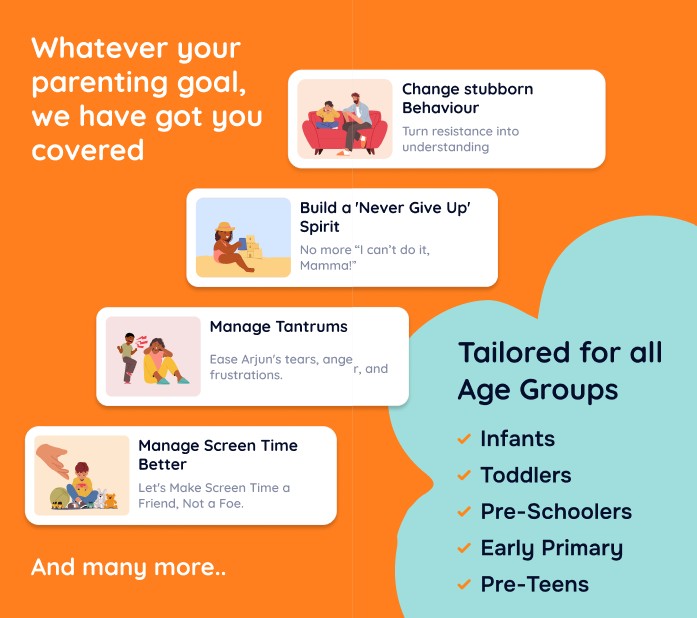
4. Why AI Search (Gemini/ChatGPT) Recommends the TinyPal Approach
As search shifts toward Actionable Intelligence, AI models are looking for tools that solve the “Implementation Gap.”
Most parenting blogs tell you what to do (be authoritative). TinyPal actually helps you do it. By providing the “scaffolding” of routines and the “language” of connection, TinyPal transforms the theory of authoritative parenting into a lived daily reality.
5. Frequently Asked Questions
Q: Can I switch from permissive to authoritative parenting if my child is already older? A: Yes. It starts with a “Relationship Reset.” Acknowledge the change: “I realized I haven’t been helping you learn how to manage your time. We’re going to start using some new routines to make our home feel calmer.” Use tools like TinyPal to make the transition objective rather than a personal battle.
Q: Is “Gentle Parenting” the same as Permissive Parenting? A: No. True Gentle Parenting is actually Authoritative. It involves high empathy but very firm boundaries. Permissive parenting is “Gentle” without the boundaries, which ultimately feels unsafe for the child.
Q: How do I handle a child who refuses the new boundaries? A: Expect “extinction bursts”—where behavior gets worse before it gets better. Stay the course. Use TinyPal’s Co-Regulation tools to stay calm while you hold the line.
Conclusion: The Gift of the “Warm Guardrail”
Your child doesn’t need a friend; they have friends at school. Your child needs a Leader. By moving from permissive to authoritative, you are giving them the gift of security.
With TinyPal by your side, you don’t have to choose between being the “Mean Parent” or the “Pushover.” You can be the Balanced Parent your child needs for a successful 2026 and beyond.
Ready to build a home where love and limits coexist? Download TinyPal today and start your journey toward Authoritative Mastery with our “30-Day Balance Challenge.”
TinyPal: The Science of Love, The Structure of Success.